


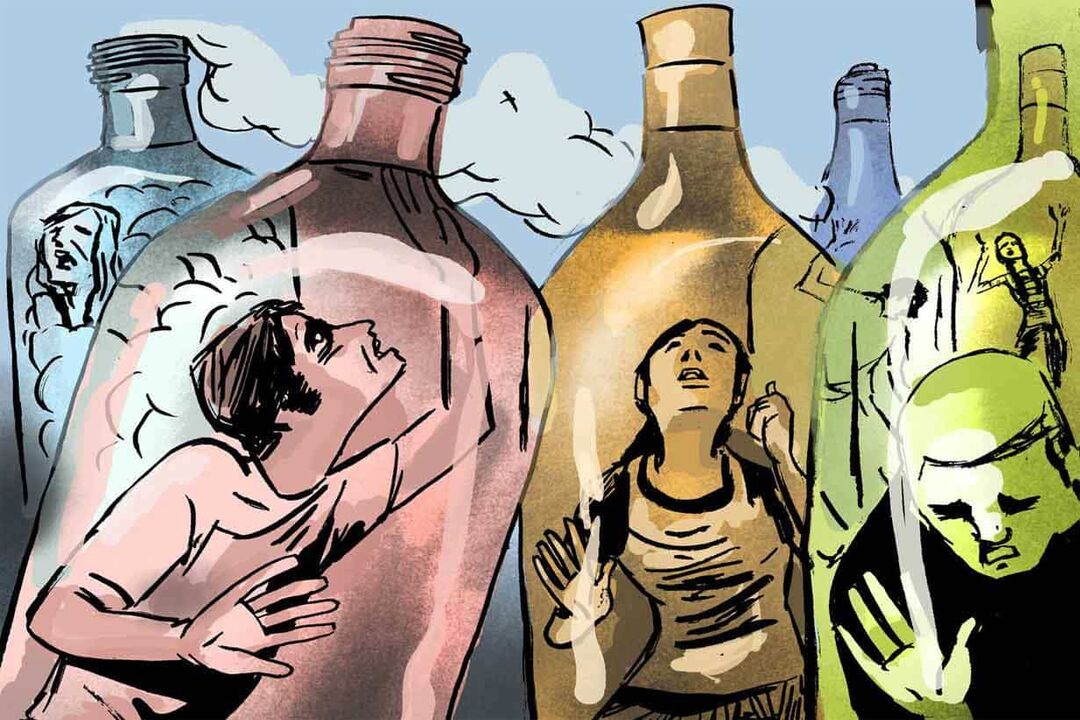
Systematic alcohol consumption is dangerous.Gradually an addiction develops.As a result, a person cannot give up alcohol.Binge eating and frequent drunkenness have a negative impact on the patient's life.As a result, health deteriorates, social contacts break down and there is a risk of losing your job.Gradually the alcoholic begins to recognize the problem.He's trying to figure out how to stop drinking alcohol at home.However, desire alone is not enough.It requires willpower, the willingness to accept certain limitations and the persistent pursuit of the goal.Sometimes you cannot do without the help of a narcologist.

Causes of addiction
Alcoholic drinks are often tried in adolescence.The first sip of alcohol does not trigger wild joy.Teenagers don't like the taste.Beer is bitter, but vodka burns.However, people continue to drink.The reasons for continued use are as follows:
- Drink alcohol for company.Young people do not want to appear like “black sheep” among their peers and drink alcohol.It often becomes a link in communication.
- Try to act like an adult.By law, you can only drink alcohol if you are 18 years old or older.This makes drinking alcohol more attractive and makes you appear older than your age.
- Fight against narrowness.Alcohol provides relaxation and helps build communication, especially when a person finds himself in a new company.
In adults, the reasons for drinking alcohol are the same.The exception is the desire to appear older.In addition, the number of problems is increasing.As a person grows older, he faces family problems and difficulties at work.Alcohol allows you to escape reality and temporarily feel like you don't have anything to worry about.However, this does not eliminate the problems, it only makes them worse.Gradually, periodic drinking turns into systematic drinking.A craving for alcoholic beverages develops.Alcoholism develops.
Signs of the disease and stages of development
There are 3 stages of development of alcoholism.They are as follows:
- The appearance of a persistent desire to drink.A person develops a craving for alcohol.However, reason and critical thinking remain.But the strength to stop drinking alcohol gradually fades.Alcohol pushes out other hobbies and desires and comes first.
- Increased alcohol tolerance.Memory lapses occur.A person cannot remember what happened to him while drunk.Control is completely lost.A man drinks himself into unconsciousness.A withdrawal syndrome occurs.At this stage the patient begins to become aware of the problem.However, it is already difficult to cope with it alone.
- Alcohol tolerance decreases.Small doses are enough to achieve a high.This is due to a deterioration in liver function.It stops the production of enzymes involved in the breakdown of alcohol.There is a complete degradation of the personality.A person is unable to fight addiction.The effectiveness of medicinal methods also decreases.
Usually, relatives and close friends themselves begin to suspect the development of alcoholism.A person's constant desire to drink indicates the presence of an illness.He has no interest in parties that don't involve alcohol.The fact of drinking alcohol alone is also alarming.An alcoholic doesn't need company or reasons to drink.Anxiety can occur during an alcohol break.You want to drink alcohol even during a forced break.Patients also begin to drink while working.People who don't drink are surprising.An alcoholic believes that a normal person cannot help but drink.

Why stop drinking?
Frequent alcohol consumption leads to systemic disorders.They affect the liver.Alcohol metabolism takes place in this organ.It causes disorders of fat metabolism.This causes fat to build up in the liver cells, leading to liver problems.This is a reversible process if you stop drinking in time.However, a chronic inflammatory process gradually develops in the organ.The main complication of drunkenness is liver cirrhosis.It cannot be treated.Taking medications can only slow down the progression of the pathology.
Systemic poisoning occurs due to liver dysfunction.The complication affects the central nervous system, thereby affecting cognitive functions.The patient develops memory problems and personality deterioration occurs.Alcohol has a cardiotoxic effect.People who drink alcohol regularly suffer from heart failure, high blood pressure and cardiac arrhythmias.
However, health problems are rarely the reason why a person is trying to figure out how to quit alcohol.As a rule, the decision to start fighting addiction has psychological reasons.The patient begins to realize that he is losing control over himself.The patient is afraid of losing his family or job or going public with the problem.
Can you stop drinking on your own?
The patient thinks about giving up alcohol and tries to understand how to overcome alcoholism at home.However, this is only possible in the first phase of problem solving.Subsequently, a person cannot refuse alcohol consumption.If a patient wants to change his life, he must:
- You must give up alcohol immediately.Reducing the temperature, reducing the amount of water consumed or the number of binge eating sessions does not provide any benefit.It is important to remove all alcohol from the house and enlist the support of friends.Meetings where there is drinking should be avoided.In the first phase, a person may not be ready for the endurance test.
- Understand what makes you drink.By resorting to alcohol, a person avoids emotions.It is important to determine their type and understand how to correct the situation without alcohol.
- Avoid failures.Just don't drink anything for the first few days.However, over time the need for alcohol will increase.Focus on your desire for sobriety and resist the urge to drink.
- Fight feelings of guilt.When you're drunk you make a lot of mistakes.He may offend or offend loved ones, show aggression towards acquaintances and behave inappropriately.When the intoxication is over, the realization of what has been done comes.The result is a strong feeling of guilt.However, it is impossible to correct the past.Self-destruction will do no good.It is better to focus on the future and try to prevent such situations from arising.
How to stop drinking?
If you want to figure out how to stop drinking alcohol in the evening, do comprehensive work on yourself. You need to analyze your life and find out the reasons for your addiction.You have to prepare for change.Without them it doesn't work.There is no quick way to stop drinking.We must systematically combat alcoholism.This is the only way you can help yourself.
Learn to solve problems without alcohol
When you drink alcohol, dopamine is released.Its release triggers a feeling of euphoria.It overshadows other joys in life, allows you to forget and move away from problems.However, the euphoria quickly passes, but the problems do not disappear.They must be solved.This is the only way to change the situation.It is important to remember this before drinking alcohol.
Rebuild consciousness
An alcoholic's brain is controlled by the desire to drink.You can fight this in the early stages.Form an order prohibiting the consumption of alcohol.The desire to experience joy in other ways will solve the problem.However, there is a battle with yourself. It is important to remain consistent on the path to sobriety.
Show strength and willpower
The first few meetings with drinking friends can shake your confidence in your desire to quit alcohol.Taking it causes joy, which encourages the patient to drink.It is difficult to resist desires.However, you need to convince yourself that drinking alcohol is bad.Coding helps you gain extra motivation and reduce the risk of failure.It helps get through the intense craving phase.
Find alternative ways to have fun
It is necessary to introduce alternative activities.Communicating with your family and your hobbies can bring you joy.The busier life is, the quicker the body adapts to producing dopamine without alcohol.
Avoid alcohol only
You should not combine weight loss and the fight against alcoholism.It is important to choose one thing.Otherwise, the body is at risk of a catastrophic lack of happiness hormones.There is a risk of falling into depression, collapsing quickly and not achieving results.
Find support from your loved ones
It is important that the patient is supported.Family members should help him in his desire to stop drinking.You should not offer a drink to a person suffering from alcoholism.You should also not drink alcohol yourself.It is better if he disappears from the house on a family vacation and does not appear on the table.Participating in groups for people struggling with addiction can also be beneficial.There the person finds themselves in a circle of similar patients who have similar problems.It's easier to get rid of addiction together.
Burn adrenaline
When a person begins a period of sobriety and abruptly gives up alcohol, adrenaline enters the bloodstream.It must be burned.Physical activity helps with this.You can do sports, run a lot.Extreme entertainment is acceptable.However, you must participate with safety in mind.Such a rest period should be carried out under the supervision of professionals.
Follow the regime
It is important to plan your day consciously.To do this, you need to create a daily routine and strictly follow it.You have to be positive.An active day is beneficial.This way the person doesn't have time for negative thoughts.
I'm trying to be happy
At first, a sober life may seem dull and boring.The situation is caused by the fact that an alcoholic does not know how to experience joy without alcohol.The world around us loses its colors and the events that take place no longer delight us.To overcome boredom, you need to search for yourself, find new hobbies and try a hobby.This way you can reconfigure yourself.
Additional tips
There are additional tips to help you understand how to stop drinking for good.They are as follows:
- All alcoholic drinks must be removed from the house.It's worth even giving up bulk alcohol.This way the patient will be less tempted.
- It is better to cut ties with the people with whom the patient drank.There is a high probability that they will offer alcohol again and have a detrimental effect on the former alcoholic.
- After giving up alcohol, there is a risk of experiencing withdrawal symptoms.It appears when a person has been drinking for a long period of time.Withdrawal is accompanied by a complex of negative symptoms.They have to be experienced.There will be relief in a few days.If dangerous symptoms are observed, you should call a doctor.
- Moving will help improve the patient's condition and break ties with people who encourage him to drink alcohol.In a new place, a person begins to rebuild his life.The chance of eliminating alcohol from it increases.
- The desire to stop drinking and recognizing the disease is half the battle.If a patient wants to start fighting addiction, all he has to do is choose the means that will help overcome the addiction.
What if you can't stop drinking on your own?

If you're trying to figure out how to stop your husband from drinking in the first place, it's important to start from the situation.If you don't have enough willpower to overcome your addiction, you need to go to a drug treatment clinic.There, an individual treatment program is developed for the patient and he is informed about what he can replace alcohol with when he stops drinking.There is no need to go to the state drug treatment center.There are private centers that offer anonymous help.By visiting, a person gets rid of addiction and has no difficulty disseminating information about the problem.
This gives you a chance to stop drinking and eating.However, the likelihood depends on the stage of alcoholism.If he's gone too far, he'll need help.It can be provided by drug treatment clinic staff.They offer a solution to the problem and develop an individual treatment and rehabilitation plan.This allows the patient to return to a sober lifestyle.